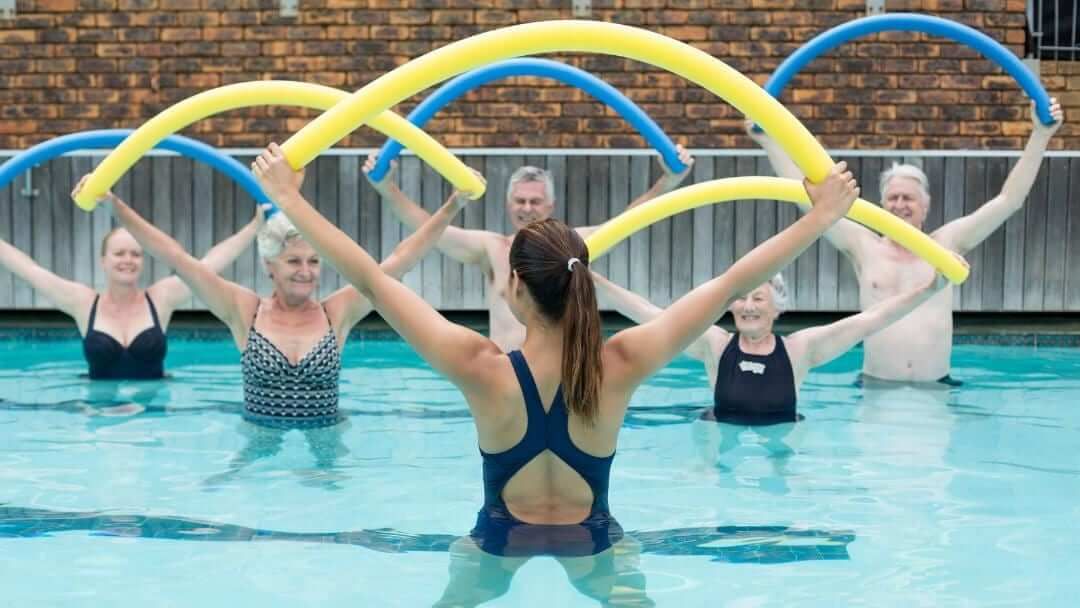
Aquatic Exercise for Weight Loss: What It Burns and How to Start
Aquatic exercise, any structured workout done in a pool or open water, lets you burn real calories while the water carries most of your weight, so your joints take a fraction of the pounding they would on pavement or a gym floor. That trade-off matters most for two kinds of people: someone whose extra weight makes running or jumping genuinely uncomfortable, and someone with a knee, hip, or back that already hurts before they even start. Patients in our medically supervised weight loss program across the Pee Dee and Grand Strand often pair aquatic exercise like this with their plan, because it is a form of exercise most patients can actually keep doing long enough for it to matter.
Does aquatic exercise actually help you lose weight
Yes. Water is far denser than air, so every stroke, kick, or step you take against it meets real resistance, which is what turns a pool session into a calorie-burning workout rather than a soak. At the same time, in chest-deep water, buoyancy supports roughly 70 percent of your apparent body weight, which can substantially reduce the load on your joints, though the exact amount shifts with depth and movement. That is part of why lap swimming or a water aerobics class rarely aggravates a bad knee the way running on a treadmill does. You get the resistance training and the cardio in the same thirty minutes, without the landing force that stops a lot of land-based cardio short.
Compared with walking or jogging on land, aquatic exercise generally asks more of your muscles per minute because water resists you in every direction, not just under your feet. It also builds strength without the sore joints that keep some patients from ever building a consistent land-cardio habit in the first place.
If ongoing joint pain, not just impact avoidance, is the reason you are reading this, losing weight is itself one of the most effective ways to take pressure off an aching knee or hip over time. We cover that mechanism in more depth elsewhere on our blog; this page focuses on aquatic exercise as the workout itself.
How many calories does aquatic exercise burn
A vigorous lap-swimming session burns about 360 calories in 30 minutes for a 155-pound adult, according to Harvard Health Publishing’s calorie-burn chart. General swimming burns about 216 calories in the same 30 minutes, and water aerobics burns about 144 calories. Heavier or lighter bodies will burn somewhat more or less than these figures, and effort matters more than the activity label: a hard-charging water aerobics class can outburn a lazy lap swim.
Water jogging, done standing in chest-deep water for shallow-water jogging or suspended with a flotation belt for deep-water jogging, is not part of that published chart, but it demands more effort than walking on land because you are pushing against constant resistance with every stride. Water jogging at a vigorous effort rates roughly 9.8 METs (a measure of how hard an activity works your body), on par with a hard lap-swimming session and above a standard water aerobics class, according to the Compendium of Physical Activities, the exercise-science reference researchers use to score activity intensity.
What are the best water workouts for weight loss
Different water workouts trade off calorie burn, skill level, and how much equipment they need. A week that mixes two or three of these keeps the routine from going stale.
| Workout | Effort level | Best for |
|---|---|---|
| Lap swimming | Moderate to vigorous | The highest calorie burn per minute; needs comfort in the water |
| Water aerobics class | Low to moderate, adjustable | Beginners, joint pain, and anyone who wants group structure and a set schedule |
| Water jogging or running | Moderate to vigorous | A running-style cardio workout with far less impact, no swimming skill required |
| Aqua cycling | Moderate | A cycling motion against water resistance, easy on the back and knees |
| Water-based strength moves | Low to moderate | Using pool noodles or webbed gloves for resistance to protect muscle while you lose fat |
You do not need to swim laps to get a real workout. A water aerobics class or water jogging session burns a comparable range of calories to swimming, and neither requires strong swimming technique. A basic swimsuit built for movement and a pair of water shoes for a sandy or uneven pool floor cover most of what you actually need to start.
How often should you do aquatic exercise to lose weight
Three to five sessions a week of 30 to 45 minutes is a reasonable target for weight loss, mixing steady-effort swims or classes with one or two harder interval sessions where you push your pace for a minute, then ease off and repeat. Because the impact cost is so low, most patients can train in water more often than they could tolerate the same volume of running or high-impact classes, which is part of why it works as a sustainable habit rather than a burst of motivation that fades in three weeks.
Aquatic exercise can help move the scale, especially paired with an eating plan that fits it, though results vary. The kind of fast, sustained loss most patients come to us wanting typically comes from the labs-first, physician-supervised side of the program, with exercise as one supporting habit alongside it. Hormonal conditions, insulin resistance, or medications can make weight loss harder, and exercise still helps in those situations. A physician evaluation finds what else needs treating so the workout effort pays off fully.
Ready to pair your workout with a plan built on your own labs?
Where can you do aquatic exercise on the South Carolina coast
Community pools, gym and YMCA pools, and condo or neighborhood pools all work for structured laps or a water aerobics class, and most run scheduled classes you can simply show up to. Living along the Grand Strand and Pee Dee also means the ocean itself is an option for swimming or water walking in shallow surf, though open water adds current, tide, and depth to manage that a pool does not, so stick to a guarded area and know your own limits before you swim past where you can stand.
Frequently Asked Questions About Aquatic Exercise for Weight Loss
Can I do aquatic exercise if I’m not a strong swimmer?
Can I do aquatic exercise if I’m not a strong swimmer?
Yes. Water aerobics and shallow-water jogging are done standing in chest-deep water; deep-water jogging uses a flotation belt. Either way, you never need to swim a stroke to get the workout. A water aerobics class is often the easiest place to start if you are unsure in the water, since an instructor sets the pace and you stay upright the entire time.
Does aquatic exercise help with joint pain?
Does aquatic exercise help with joint pain?
Often, yes, for two separate reasons. In the moment, the water’s buoyancy takes weight off the joint while you move, so a knee or hip that hurts on land can often tolerate a full workout in the pool. Over time, the weight you lose also reduces the everyday load on that same joint, which is a bigger piece of the picture we cover elsewhere on our blog.
Is aquatic exercise alone enough to lose a meaningful amount of weight?
Is aquatic exercise alone enough to lose a meaningful amount of weight?
It can help, but for most people it works best as one piece of a larger plan rather than the whole plan. Hormonal conditions, insulin resistance, or medications can make weight loss harder, and exercise still helps in those situations. A physician evaluation finds what else needs treating so the workout effort, water-based or otherwise, pays off fully.
Want a plan that pairs the right workout with the medical piece your weight loss actually needs?


